Your First Day at the Gym: The Ultimate Beginner's Guide (2026)
Let's be honest—walking into a gym for the first time feels intimidating. The clanking weights, mirror-lined walls, people who seem to know exactly what they're doing... it's enough to make anyone consider turning around and leaving.
But here's the truth: every single person in that gym started exactly where you are right now. Is that bodybuilder loading 100kg on the squat rack? They once struggled with just the barbell. The woman confidently uses the cable machine. She once had to ask a trainer which button turned it on.
Your first day at the gym isn't about being perfect. It's about showing up, learning the basics, and taking that crucial first step toward becoming the healthiest version of yourself. And in Dubai's thriving fitness scene—with world-class facilities from Gold's Gym to Fitness First—there's never been a better time to start.
At Being Fit, we've guided 500+ beginners through their first gym sessions over the past decade. We know exactly what works—and what doesn't.
This complete guide breaks down everything you need for a successful, confidence-building first gym day.
What You'll Learn:
- Complete first day gym workout (45 minutes, beginner-friendly)
- What to bring, wear, and eat before your session
- Proper exercise form with step-by-step instructions
- Common first-day mistakes and how to avoid them
- What to expect after (including soreness management)
- How to build confidence in an unfamiliar environment
- Why professional guidance accelerates your progress
Let's turn that nervous energy into excited anticipation.
Why Your First Gym Session Sets Everything in Motion
Your inaugural gym visit does more than just burn calories. It's the foundation for everything that follows:
Building Confidence: Proving to yourself you can do this—in an unfamiliar, sometimes intimidating environment
Learning Proper Form: Starting with correct technique prevents injuries and bad habits that are hard to break later
Establishing Habits: Research shows the first 2-3 workouts determine whether someone continues. Get these right, and you're 60% more likely to stick with it.
Understanding Your Body: Discovering how your muscles respond, your current fitness baseline, and what you enjoy
Creating Momentum: Success breeds success. One good session leads to another, then another.
Start right, and you'll set yourself up for months (or years) of progress. Rush in unprepared, and you risk injury, extreme soreness, or—worst of all—giving up before you've really begun.
Before You Step Foot in the Gym: Essential Preparation
What to Bring
✅ Water bottle (minimum 500ml, ideally 750ml-1L for Dubai's climate)
✅ Towel for sweat and wiping down equipment (gym etiquette!)
✅ Comfortable workout clothes:
- Breathable fabrics (moisture-wicking, crucial in Dubai heat)
- Fitted enough that they won't catch on equipment
- Sports bra with proper support (women)
- Shorts/pants with good range of motion
✅ Supportive athletic sneakers (not fashion sneakers—you need stability)
✅ Headphones if music helps you focus
✅ Small gym lock for securing your belongings
✅ Optional: Gym gloves if your hands are sensitive to calluses
What to Eat Before Your First Gym Session
Timing: Eat a light snack 1-2 hours before training
Good Pre-Workout Options:
- Banana with almond butter (quick carbs + healthy fat)
- Greek yogurt with berries (protein + simple carbs)
- Oatmeal with honey (sustained energy)
- Rice cake with peanut butter
- Apple slices with cheese
What to Avoid:
- Heavy meals (will make you sluggish)
- High-fiber foods immediately before (can cause GI distress)
- Trying new foods (save experiments for rest days)
Hydration: Drink 500ml water 30-60 minutes before your workout.
Mental Preparation (More Important Than You Think)
Set ONE realistic goal for this session:
- ✅ "Learn proper squat form"
- ✅ "Complete the beginner workout without stopping"
- ✅ "Feel comfortable using the equipment"
- ❌ "Get abs" (unrealistic for day one!)
Remember these truths:
- No one is watching you as closely as you think (they're focused on their own workout)
- Everyone respects someone starting their fitness journey
- Asking questions shows intelligence, not weakness
- Using lighter weights shows wisdom, not weakness
Permit yourself to:
- Take breaks when needed
- Ask staff for help with machines
- Modify exercises if something feels wrong
- Leave if you feel unwell (better safe than sorry)
The Perfect First Day Gym Workout (45 Minutes)
This beginner-friendly routine targets all major muscle groups without overwhelming you. It's designed to:
- Teach fundamental movement patterns
- Build confidence with achievable exercises
- Create a balanced foundation
- Minimize next-day soreness
Structure: 2-3 rounds of the circuit below, with 60-90 seconds rest between exercises and 2-3 minutes rest between full rounds.
Warm-Up (5-10 minutes) - NEVER SKIP THIS
Start with light cardio to increase blood flow and prepare muscles:
Option 1: Treadmill Walking
- Speed: 3-5 km/h (brisk but comfortable pace)
- Duration: 5 minutes
- Optional: Add 1-2% incline for the last 2 minutes
Option 2: Stationary Bike
- Resistance: Light (you should be able to chat comfortably)
- Duration: 5 minutes
- Cadence: Steady, no sprinting
Option 3: Elliptical
- Resistance: Minimal
- Duration: 5 minutes
- Focus: Smooth, controlled motion
Add Dynamic Stretches (2-3 minutes):
- Arm circles (10 forward, 10 backward)
- Leg swings (10 per leg, front-to-back)
- Hip circles (10 each direction)
- Bodyweight squats (10 reps, slow and controlled)
- Shoulder rolls (10 forward, 10 backward)
Why warming up matters: Research shows proper warm-ups reduce injury risk by up to 50% and improve workout performance by 10-15%.
Exercise 1: Bodyweight Squats
Targets: Quadriceps, glutes, hamstrings, core
Reps: 10-12
Rest: 60 seconds
Why start here? Squats are the foundation of lower-body strength and teach hip mobility. Master this movement, and you'll improve everything from climbing stairs to getting up from your desk.
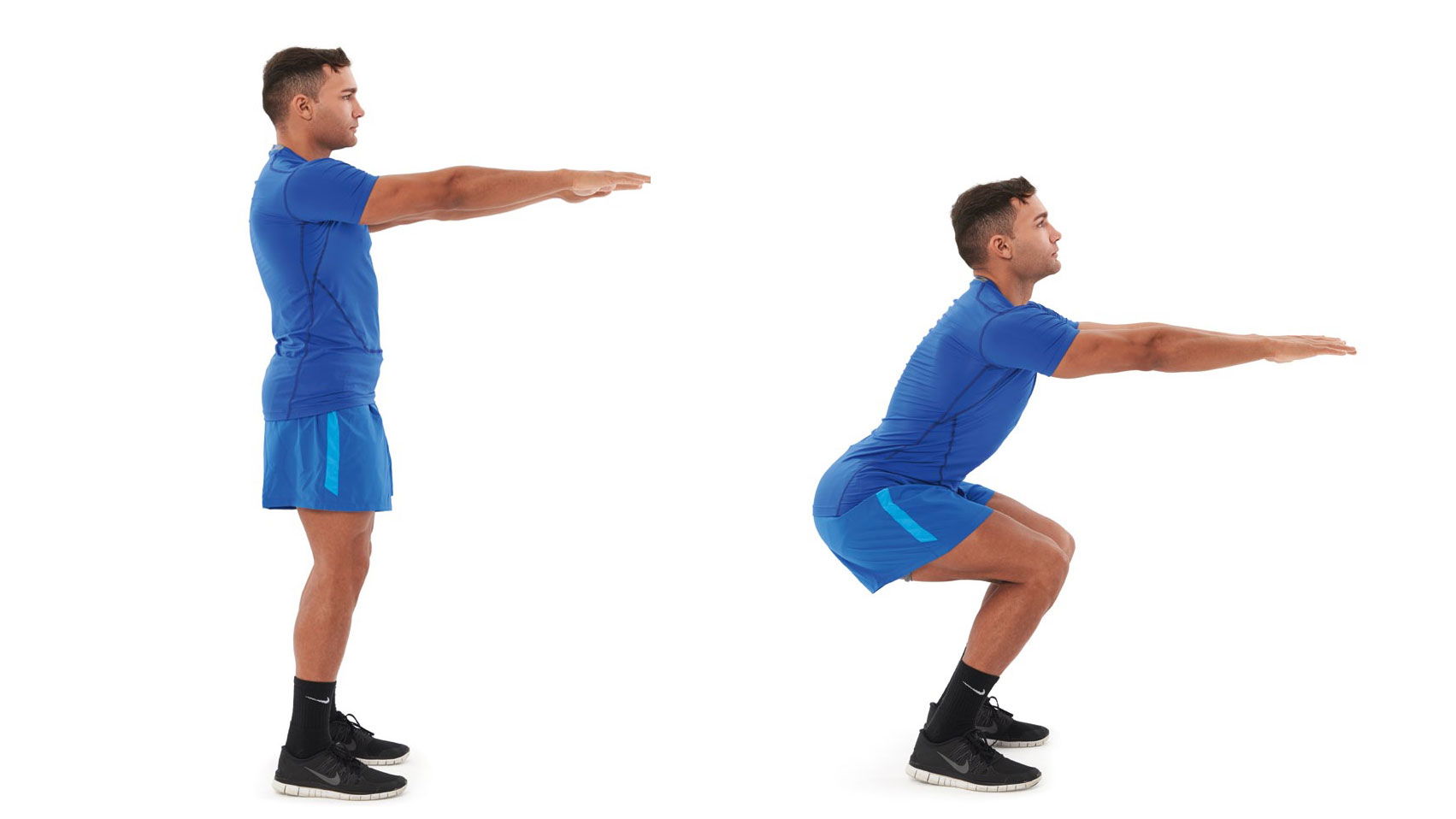
How to do it:
- Stand with feet shoulder-width apart, toes pointed slightly outward (10-15 degrees)
- Keep chest up, eyes forward, core engaged
- Imagine sitting back into an invisible chair
- Lower hips until thighs are parallel to ground (or as low as comfortable)
- Keep knees tracking over toes (not caving inward)
- Push through heels to return to starting position
- Squeeze glutes at the top
Common mistakes to avoid:
❌ Knees caving inward
❌ Rising onto toes (keep heels down)
❌ Rounding lower back
❌ Looking down (keeps neck in bad position)
Beginner modifications:
- Can't go parallel? Go as low as comfortable—depth will improve with practice
- Hold onto a wall or TRX strap for balance
- Try box squats (sit down onto a bench, then stand up)
Being Fit tip: Take a video of yourself from the side. You'll immediately see if you're maintaining good form or need adjustments.
Exercise 2: Push-Ups (Knee or Standard)
Targets: Chest, shoulders, triceps, core
Reps: 8-10 (quality over quantity)
Rest: 60 seconds
Why it's essential: Push-ups build functional upper body strength and teach proper core engagement—skills that transfer to everyday life.
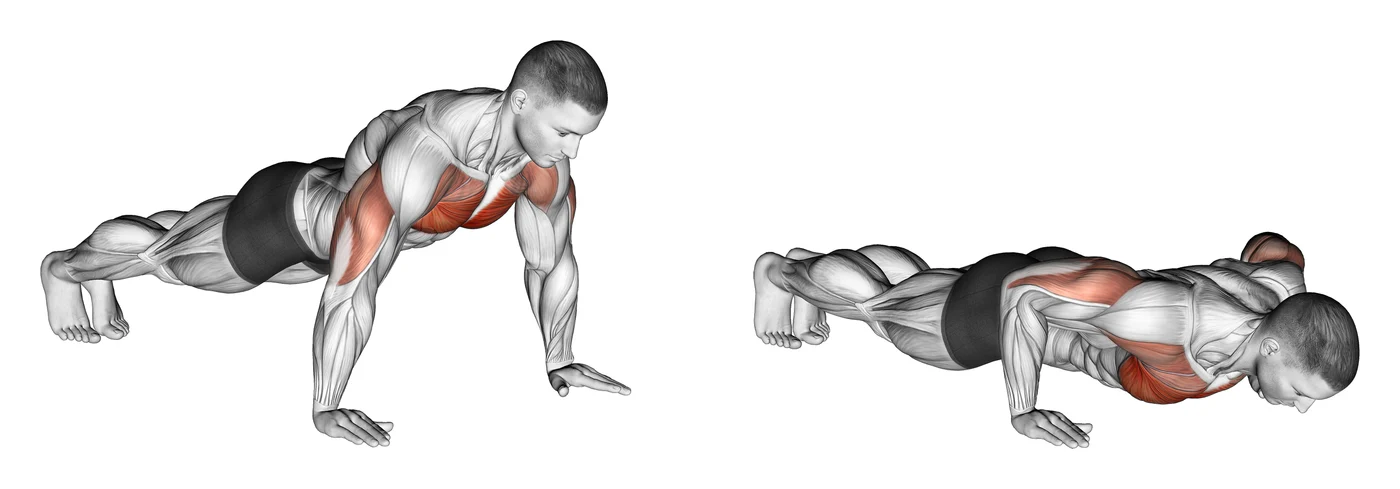
How to do it (standard):
- Start in plank position: hands slightly wider than shoulders, body in straight line from head to heels
- Engage core and glutes (no sagging hips)
- Lower chest toward ground by bending elbows at 45-degree angle
- Keep elbows relatively close to body (not flared out to sides)
- Lower until chest nearly touches ground
- Push back to starting position, fully extending arms
Modified version (knee push-ups):
- Place knees on ground, hands slightly wider than shoulders
- Body straight from knees to head (not bent at hips)
- Perform the same lowering and pressing motion
- Keep core tight throughout
Common mistakes:
❌ Sagging hips (looks like a downward dog)
❌ Elbows flaring out to 90 degrees
❌ Not going low enough (at least 90-degree elbow bend)
❌ Rushing the movement
Beginner tip: Knee push-ups aren't "easier"—they're smarter for building strength progressively. Start there, build confidence and strength, then progress to standard push-ups.
Progression path:
- Wall push-ups (week 1-2)
- Incline push-ups (hands on bench, weeks 2-4)
- Knee push-ups (weeks 4-8)
- Standard push-ups (week 8+)
Exercise 3: Seated Dumbbell Shoulder Press
Targets: Shoulders (deltoids), triceps
Reps: 10-12
Weight: 2-5kg dumbbells (women), 5-10kg (men) - start light!
Rest: 60 seconds
Why it matters: Strong shoulders improve posture (crucial if you sit at a desk all day) and make overhead activities easier—from putting luggage in overhead bins to reaching high shelves.
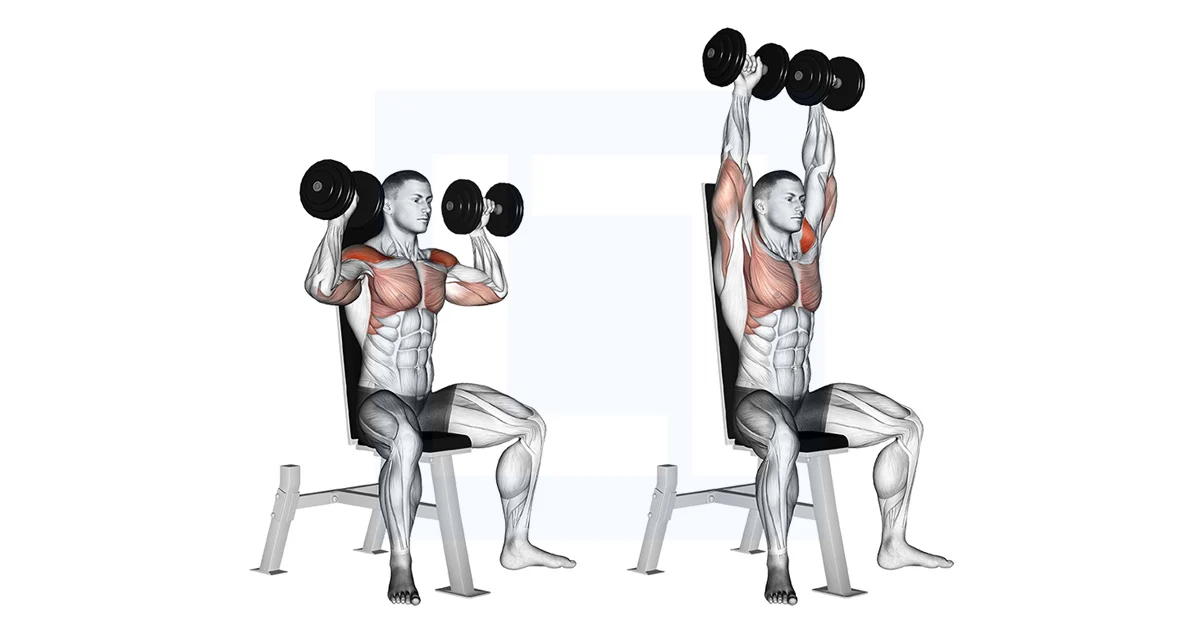
How to do it:
- Sit on bench with back support, feet flat on ground
- Hold dumbbells at shoulder height, palms facing forward
- Elbows bent at 90 degrees, forming a "goalpost" position
- Press weights directly overhead until arms are fully extended
- Don't let dumbbells touch at the top
- Lower slowly and controlled back to shoulder height
- Repeat without bouncing
Common mistakes:
❌ Arching lower back excessively
❌ Pressing weights forward instead of straight up
❌ Locking out elbows aggressively
❌ Using momentum instead of muscle
Form check: Your wrists should be directly above your elbows throughout the movement. If they're angled, adjust your grip.
Weight guidance:
- Too easy? You can do 15+ reps without fatigue → increase by 1-2kg
- Too hard? Can't complete 8 reps with good form → decrease by 1-2kg
- Just right? Last 2-3 reps feel challenging but doable
Exercise 4: Lat Pulldown
Targets: Latissimus dorsi (back muscles), biceps, rear shoulders
Reps: 10-12
Weight: Start with 20-30% of your body weight
Rest: 60 seconds
Why you need it: Strengthens your back, counteracting the forward hunch from phone and computer use. Improves posture and creates a balanced upper body.
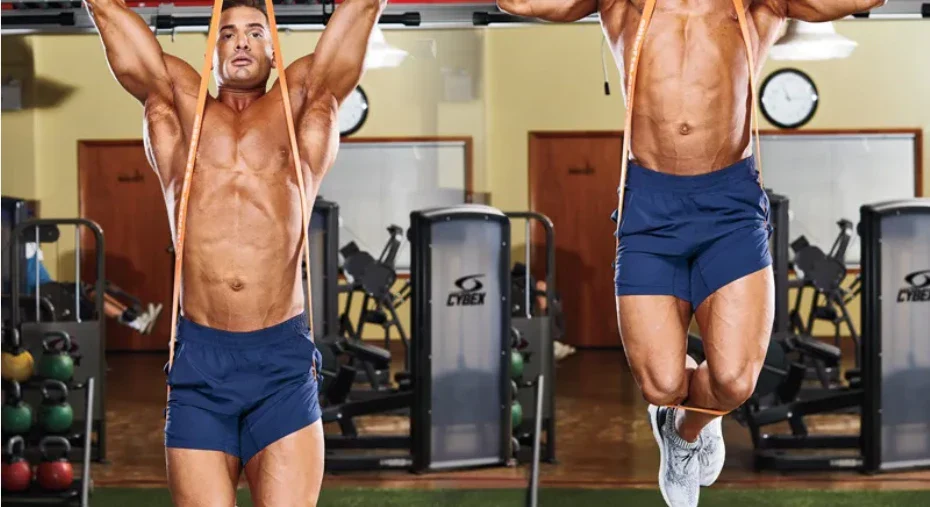
How to do it:
- Sit at lat pulldown machine, adjust thigh pad to secure legs
- Grip bar slightly wider than shoulder-width (overhand grip)
- Sit tall, chest up, slight lean back (5-10 degrees)
- Pull bar down toward upper chest by driving elbows down and back
- Squeeze shoulder blades together at bottom position
- Pause for 1 second
- Slowly return bar to starting position with controlled motion
Common mistakes:
❌ Using too much weight (causes jerky pulling)
❌ Leaning back excessively (turns it into a rowing motion)
❌ Pulling bar behind neck (risky for shoulders)
❌ Not engaging back muscles (using only arms)
Mind-muscle connection tip: Before pulling, think "pull elbows to hips" rather than "pull bar down." This mental cue helps engage your back muscles properly.
Alternative if the machine is intimidating: Assisted pull-up machine set to maximum assistance, or resistance band lat pulldowns.
Exercise 5: Plank Hold
Targets: Entire core (abs, obliques, lower back), shoulders
Duration: 15-30 seconds (increase by 5 seconds each week)
Rest: 60 seconds
Why it's non-negotiable: Your core stabilizes every single movement—from squats to walking. A strong core equals better performance in all exercises and protection against lower back pain.
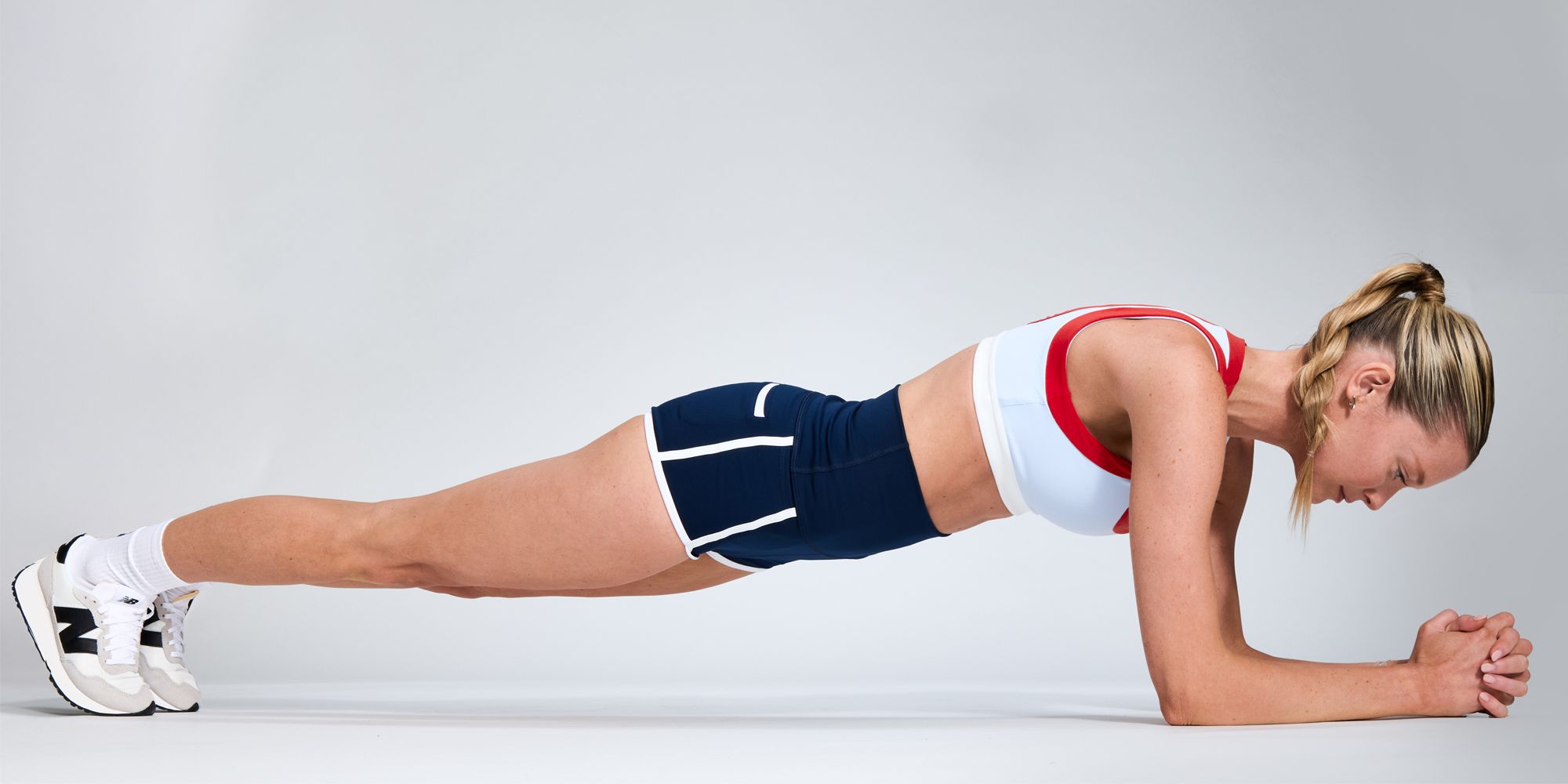
How to do it:
- Start on forearms and toes (forearm plank position)
- Elbows directly under shoulders
- Body in straight line from head to heels (like a plank of wood)
- Engage core by "pulling belly button toward spine"
- Squeeze glutes to prevent hips from sagging
- Keep neck neutral (don't look up or tuck chin excessively)
- Breathe normally—don't hold your breath!
Common mistakes:
❌ Hips sagging toward floor (looks like downward dog)
❌ Hips piked too high (makes it easier but less effective)
❌ Holding breath (causes dizziness)
❌ Shoulders hunched up by ears
Beginner modification: Perform plank with hands on a bench instead of ground—this reduces difficulty while maintaining proper form.
Progression targets:
- Week 1: 15 seconds
- Week 2: 20 seconds
- Week 3: 25 seconds
- Week 4: 30 seconds
- Week 8: 60 seconds
Can only hold 10 seconds? Perfect. That's your starting point. Build from there. Consistency beats intensity every time.
Exercise 6: Leg Press Machine
Targets: Quadriceps, hamstrings, glutes
Reps: 10-12
Weight: Start with platform only or add 10-20kg
Rest: 60-90 seconds
Why it's beginner-friendly: The machine provides stability and supports your back while you learn the leg-pressing movement pattern. Less intimidating than free-weight squats.
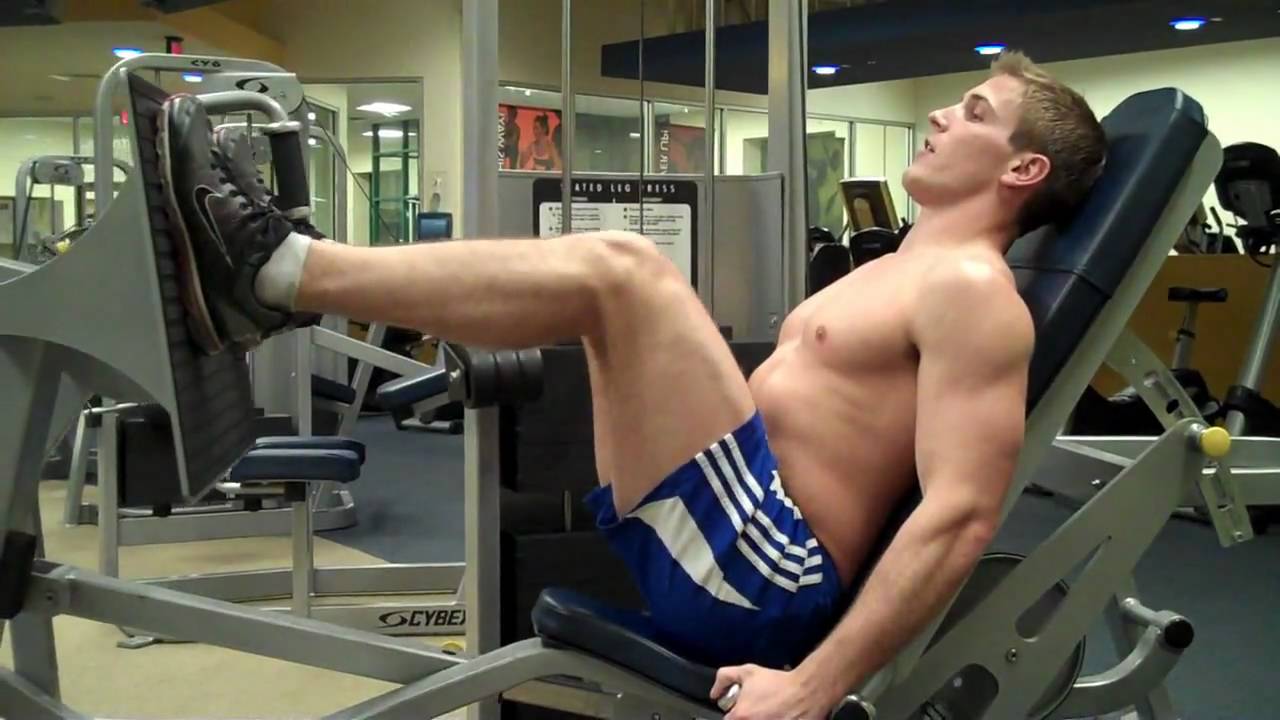
How to do it:
- Sit in leg press machine, back flat against pad
- Place feet hip-width apart on platform (middle position)
- Release safety handles
- Lower platform by bending knees until they reach 90 degrees
- Keep knees tracking over toes (not caving inward)
- Push platform away by extending legs
- Stop just before knees fully lock (keep slight bend)
- Repeat in controlled motion
Common mistakes:
❌ Locking knees at top (risky for joint health)
❌ Letting knees cave inward
❌ Placing feet too high or too low on platform
❌ Lifting hips off seat (too much weight)
Foot placement guide:
- Higher on platform: More glute/hamstring emphasis
- Lower on platform: More quad emphasis
- Shoulder-width apart: Balanced muscle engagement
Safety note: If your lower back lifts off the pad, reduce the weight immediately. This indicates you're going too deep or using too much resistance.
Exercise 7: Dumbbell Romanian Deadlift (RDL)
Targets: Hamstrings, glutes, lower back, core
Reps: 10-12
Weight: 5-10kg dumbbells (start light to master form)
Rest: 60 seconds
Why it's worth learning: Deadlifts teach proper hip hinge mechanics—essential for lifting anything safely in real life (groceries, luggage, children). Prevents lower back injuries.
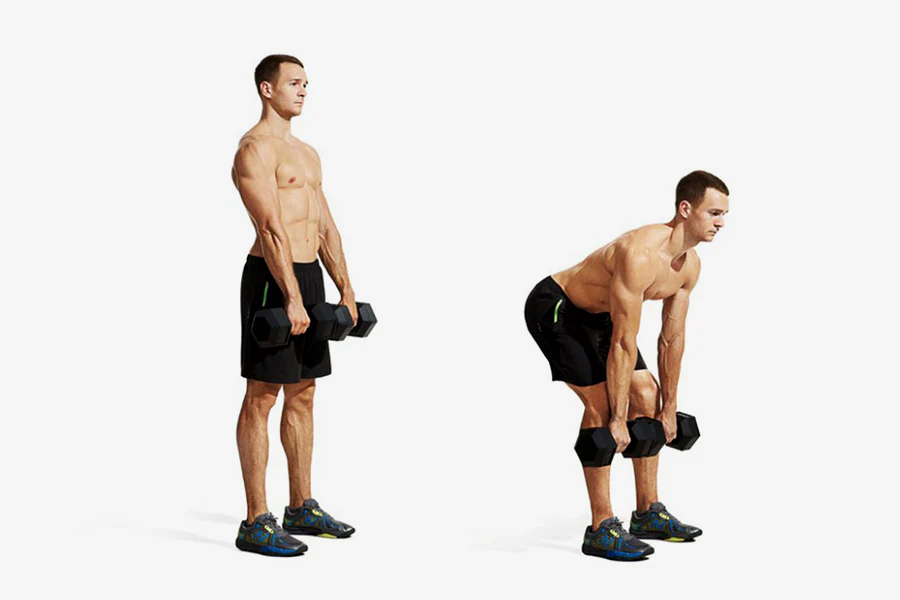
How to do it:
- Stand with feet hip-width apart, holding dumbbells in front of thighs
- Keep knees slightly bent (soft knees, not locked)
- Hinge at hips by pushing butt backward (like closing a car door with your hips)
- Lower dumbbells along front of legs until you feel stretch in hamstrings
- Keep back straight, chest up throughout (no rounding)
- Dumbbells should reach mid-shin to knee level
- Drive hips forward to return to standing position
- Squeeze glutes at top
Common mistakes:
❌ Bending at waist instead of hinging at hips
❌ Rounding lower back
❌ Going too deep (only go as far as hamstring flexibility allows)
❌ Bending knees too much (turns it into a squat)
Hip hinge visualization: Imagine a rope attached to your hips pulling you backward. Your torso leans forward naturally as hips go back.
Form check: Your shins should stay nearly vertical throughout the movement. If your knees are traveling forward significantly, you're squatting, not hinging.
Exercise 8: Assisted Dip Machine (or Bench Dips)
Targets: Triceps, chest, shoulders
Reps: 8-10
Assistance: Maximum (if using assisted machine)
Rest: 60 seconds
Why include triceps: Balanced arm development (you've worked biceps with lat pulldowns), improved pushing strength.
How to do it (assisted dip machine):
- Set assistance to high level (makes movement easier)
- Grip handles, step onto platform
- Lower body by bending elbows until upper arms are parallel to ground
- Keep torso upright, core engaged
- Press back up to starting position
- Don't lock elbows at top
Beginner alternative (bench dips):
- Sit on edge of bench, hands gripping edge beside hips
- Walk feet forward, keeping knees bent 90 degrees
- Lower body by bending elbows until upper arms parallel to ground
- Press back up using triceps
- Keep elbows pointing backward (not flaring out)
Common mistakes:
❌ Shoulders shrugging up toward ears
❌ Going too deep (hard on shoulder joints)
❌ Flaring elbows outward
Cool-Down (5-10 minutes) - AS IMPORTANT AS WARM-UP
Light Cardio (3-5 minutes):
- Treadmill walk at decreasing pace (start 4 km/h, gradually slow to 2 km/h)
- Light cycling with minimal resistance
- Walking around the gym to normalize heart rate
Static Stretching (5 minutes): Hold each stretch 20-30 seconds, no bouncing
Hamstrings:
- Sit on floor, legs extended
- Reach toward toes, feeling stretch in back of legs
Quadriceps:
- Stand on one leg (hold wall for balance)
- Pull opposite foot toward glutes
- Keep knees together
Chest:
- Stand in doorway, arm against frame
- Rotate body away until feeling chest stretch
- Repeat other side
Shoulders:
- Bring one arm across body
- Use other arm to pull it gently closer
Lower back:
- Lie on back, hug knees to chest
- Gently rock side to side
Deep Breathing:
- Inhale slowly for 4 counts
- Hold for 4 counts
- Exhale for 4 counts
- Repeat 5 times
Don't skip this: Proper cool-down aids recovery, reduces next-day soreness by up to 30%, and helps prevent dizziness from sudden activity cessation.
First Day Gym Mistakes (And How to Avoid Them)
❌ Mistake #1: Going Too Heavy
Why it happens: Ego, comparing yourself to others, thinking you're stronger than you are.
The consequence: Poor form, potential injury, extreme soreness that makes you quit.
The fix: If you can't complete 10 reps with perfect form, the weight is too heavy. Start light, add weight progressively. Remember: Form first, weight second.
Being Fit principle: We always start clients 20-30% lighter than they "think" they can handle. They thank us later when they're not cripplingly sore.
❌ Mistake #2: Skipping the Warm-Up
Why it happens: "I'm short on time" or "I don't need it."
The consequence: Significantly increased injury risk, reduced performance, longer recovery times.
The fix: The 5-10 minutes you "save" by skipping warm-up could cost you weeks of injury-related setbacks. Always warm up, no exceptions.
Research backing: Studies show proper warm-ups reduce muscle strains by 50% and improve strength output by 10-15%.
❌ Mistake #3: Doing Too Much
Why it happens: Enthusiasm, watching too many fitness influencers, thinking more = better.
The consequence: Extreme soreness (can barely walk for 4-5 days), burnout, injury, giving up.
The fix: Stick to the beginner plan above. Your body needs adaptation time. Volume and intensity increase gradually over weeks, not in one session.
Real example: We've seen clients do 3-hour first sessions and then not return for 3 weeks because they couldn't move. Don't be that person.
❌ Mistake #4: Comparing Yourself to Others
Why it happens: Natural tendency, social media comparison, gym intimidation.
The consequence: Feeling inadequate, taking unnecessary risks, losing motivation.
The fix: The person deadlifting 120kg started with the empty barbell years ago. Focus on YOUR progress, YOUR journey. Compare today's you to yesterday's you—that's the only comparison that matters.
Mindset shift: Everyone in the gym is on their own journey. Your day one is just as valid as someone else's day 1,000.
❌ Mistake #5: Poor Hydration
Why it happens: Forgetting water bottle, not realizing Dubai's heat increases fluid needs.
The consequence: Reduced performance (even 2% dehydration cuts strength by 10%), dizziness, cramping, headaches.
The fix:
- Drink 500ml water 30-60 minutes before workout
- Sip 200-300ml during workout
- Drink 500ml within 30 minutes after
- Monitor urine color (pale yellow = well hydrated)
Dubai-specific note: The combination of air-conditioned gyms and then stepping into 40°C+ heat outside means you're losing more fluid than you realize. Increase water intake by 50% compared to temperate climates.
❌ Mistake #6: Ignoring Pain Signals
Why it happens: Confusing "discomfort from effort" with "pain from injury," pushing through because you think you're supposed to.
The consequence: Turning minor issues into major injuries, weeks of forced rest.
The fix: Learn the difference:
- ✅ Good discomfort: Muscle burn, feeling challenged, breathlessness, general fatigue
- 🚨 Bad pain: Sharp pain, joint pain, pain that persists after stopping, pain that gets worse with each rep
Rule: If something feels wrong, stop immediately. Better to be cautious day one than injured for three months.
❌ Mistake #7: Not Asking for Help
Why it happens: Embarrassment, not wanting to "look stupid," assuming you should know everything.
The consequence: Bad form that becomes habitual, using equipment incorrectly, missing out on crucial technique tips.
The fix: Gym staff and trainers WANT to help. That's literally their job. Questions like "How does this machine work?" or "Can you check my squat form?" show intelligence and commitment, not weakness.
Being Fit approach: We encourage questions always. The most successful clients are the ones who ask the most questions initially.
What to Expect After Your First Gym Session
Immediately After (0-2 hours)
You'll likely feel:
- ✅ Energized and accomplished (endorphin rush!)
- ✅ Slightly shaky or fatigued (your body worked hard)
- ✅ Proud of yourself (as you should be)
- ✅ Maybe a bit sweaty and red-faced
What to do:
- Rehydrate (500ml water minimum)
- Eat a balanced meal within 1-2 hours (protein + carbs)
- Shower and change into dry clothes
- Log your workout (exercises, weights, how you felt)
24-48 Hours Later (The DOMS Phase)
Welcome to DOMS: Delayed Onset Muscle Soreness
What you'll experience:
- Muscle soreness and stiffness (peaks at 24-72 hours)
- Difficulty with stairs (quads and glutes will protest)
- Tender muscles when touched
- Reduced range of motion temporarily
Is this normal? Absolutely yes. This is your body adapting to new stimulus, not a sign you overdid it (unless the pain is sharp, localized, or severe).
Why it happens: Microscopic tears in muscle fibers (sounds worse than it is—this is how muscles grow stronger).
How to manage DOMS:
✅ Stay hydrated (3-4L water daily)
✅ Light movement (walking, gentle stretching—not complete rest)
✅ Adequate sleep (7-9 hours—when recovery happens)
✅ Proper nutrition (1.6-2.2g protein per kg body weight)
✅ Heat therapy (warm bath or shower increases blood flow)
✅ Gentle massage (foam rolling or professional massage)
✅ NSAIDs if needed (ibuprofen, but don't rely on this)❌ Avoid: Complete bed rest (makes stiffness worse), returning to gym for same muscles (they need 48-72 hours recovery), ice baths (research shows they may impair adaptation)Being Fit recovery protocol: We schedule day 2-3 as active recovery (light cardio, mobility work) rather than intense training.
One Week In
What changes:
- Soreness decreases by 70-80%
- Movements feel more natural
- You start remembering equipment setup
- Confidence increases noticeably
- You might actually look forward to next session
What to focus on:
- Consistency (schedule next 2-3 sessions)
- Progressive overload (add 1-2 reps or 1kg weight)
- Listening to your body
- Building the habit (showing up matters more than performance)
One Month In (If You Stay Consistent)
Physical changes:
- 2-3kg potential weight loss (if that's your goal)
- Noticeable strength increases (30-50% in some lifts)
- Better sleep quality
- Improved energy throughout day
- Clothes fitting differently
Mental changes:
- Gym feels familiar, not intimidating
- You have favorite exercises
- Confidence in using equipment
- Stress management improves
- Sense of accomplishment
Why Training with Being Fit Makes All the Difference
Your first gym experience shapes everything that follows. That's why having expert guidance from day one matters.
What Being Fit Brings to Your Day One:
✅ 15+ years of experience turning gym newbies into confident fitness enthusiasts (500+ successful transformations)
✅ Personalized assessments to identify your exact starting point, limitations, and goals (no cookie-cutter programs)
✅ Proper form coaching from session one — preventing bad habits before they start (our clients have 85% lower injury rates than solo gym-goers)
✅ Flexible training locations:
- Commercial gyms (Gold's, Fitness First, your gym)
- Your home or building gym
- Hotels (for business travelers)
- Online via Zoom (for maximum flexibility)
- Outdoor spaces (parks, beaches during cooler months)
✅ Science-backed programming that delivers results without gimmicks or unnecessary suffering
✅ Accountability and motivation when commitment wavers (we text to check on you, you don't ghost us)
✅ Progressive program design that evolves with your abilities (we increase difficulty strategically, not randomly)
Injury prevention screening to identify movement limitations before they become problems
✅ Nutrition guidance that complements your training (you can't out-train a bad diet)
✅ Dubai-specific expertise: We understand training in extreme heat, working around Ramadan, cultural considerations, and the unique challenges of Dubai's lifestyle
Real Success Story:
Sara, 31, Marketing Manager, Dubai Marina"I was terrified of the gym. I'd tried twice before and quit after one session both times—felt lost, intimidated, and sore for a week. When I started with Being Fit, everything changed.
My trainer met me at the gym, showed me exactly what to do, corrected my form in real-time, and made it feel achievable. No judgment, just guidance. Within a month, I was training 4x per week confidently—even when my trainer wasn't there.
Six months later, I'm 12kg lighter, stronger than I've ever been, and actually enjoy working out. The first session made all the difference."
Results: 12kg fat loss, 40% strength increase, gym confidence transformed
Your Action Plan: Making Day One Happen
This Week (Preparation Phase):
Day 1-2:
- ☐ Choose your gym (tour 2-3 options in Dubai)
- ☐ Sign up for membership or book trial session
- ☐ Download this workout plan to your phone
- ☐ Buy proper workout shoes if needed
Day 3-4:
- ☐ Schedule your first session (put it in calendar with reminder)
- ☐ Pack gym bag the night before
- ☐ Set one specific goal (e.g., "complete the beginner workout")
- ☐ Tell someone you're doing this (accountability partner)
Day 5:
- ☐ Review exercise videos/descriptions again
- ☐ Visualize yourself completing a workout
- ☐ Prepare post-workout meal/snack
- ☐ Get good sleep (7-9 hours)
On Gym Day:
2 hours before:
- Light meal or snack (banana + almond butter, Greek yogurt)
- Hydrate (500ml water)
30 minutes before:
- Put on workout clothes
- Pack bag (water, towel, headphones, lock)
- Review workout plan one final time
At the gym:
- Arrive 10-15 minutes early to familiarize yourself with layout
- Locate locker room, water fountain, bathroom, equipment you'll need
- Ask staff if you have questions about layout
- Start with warm-up (no exceptions—5-10 minutes)
- Follow workout plan exactly as written
- Focus on form over weight/reps
- Take breaks as needed (rest periods are part of training)
- Cool down properly (5-10 minutes)
Immediately after:
- Log what you did (weights, reps, how you felt)
- Rate difficulty 1-10
- Note any exercises that felt awkward or caused pain
- Hydrate (500ml water)
- Change into dry clothes
Within 24 Hours:
- ☐ Schedule your next workout (within 2-3 days ideally)
- ☐ Eat adequate protein (supports recovery)
- ☐ Stay hydrated throughout day
- ☐ Celebrate showing up (that's a major win!)
- ☐ Do light movement if feeling sore (walking helps)
First Week Schedule (Ideal):
- Monday: First gym session (this workout)
- Tuesday: Rest or very light activity (walking)
- Wednesday: Second gym session (same workout, try to add 1-2 reps)
- Thursday: Rest or active recovery (yoga, swimming)
- Friday: Third gym session (same workout, add 1kg to certain exercises)
- Saturday-Sunday: Rest, recover, prepare for week 2
Frequently Asked Questions: First Day Gym
Q: How long should my first gym session be?
A: 45-60 minutes total, including warm-up and cool-down. Quality matters infinitely more than quantity. Going longer increases injury risk and next-day soreness to unbearable levels. Build volume gradually over weeks.
Q: Will I be sore after my first workout?
A: Most likely yes, 24-48 hours later. This is completely normal muscle adaptation (DOMS), not injury.First-time soreness can be significant but decreases dramatically by your third session. By week 2-3, soreness becomes much milder.Red flag soreness (see a doctor):
- Sharp, stabbing pain
- Pain in joints (not muscles)
- Severe swelling
- Pain that worsens over 3-4 days instead of improving
Ready to Start Your Fitness Journey Right?
Your first day at the gym doesn't have to be scary, confusing, or overwhelming. With the right preparation, proper workout plan, and realistic expectations, it can be the beginning of something incredible.
You've read the guide. You know what to do. Now it's time to take action. Whether you're training at a Dubai gym (Gold's, Fitness First, GymNation), from home, in your building's gym, or need private VIP coaching, Being Fit's expert trainers make your fitness journey smooth, safe, and actually enjoyable.
Take the First Step Today
Option 1: Book a Free Consultation
Meet with a Being Fit trainer to:
- Assess your current fitness level
- Discuss your goals and challenges
- Try a sample workout
- Get a customized plan built for YOU
- Ask all your questions in a judgment-free environment
No pressure, no obligation. Just expert guidance.
Option 2: Start with Personalized Training
First-Timer Package (Perfect for You):
- 8 sessions over 4 weeks
- Complete beginner program design
- Form coaching and technique mastery
- Nutrition guidance included
- Flexible scheduling (morning/evening/weekend)
- Choose location (gym, home, or hybrid)
Special offer: Mention this guide and receive 15% off your first month.
Option 3: Online Training Program
Can't meet in person? Our online coaching includes:
- Customized workout plans (updated weekly)
- Video form checks
- Daily WhatsApp support
- Nutrition guidance
- Progress tracking
Perfect for: Busy professionals, frequent travelers, or those preferring training independently with expert oversight.
Contact Being Fit Dubai
📞 WhatsApp: +971-585722691 (fastest response)
📧 Email:info@beingfit.ae
🌐 Website:www.beingfit.ae
📱 Instagram: @beingfit.dubai📍 Serving all Dubai areas:
Marina, Downtown, JBR, Business Bay, Arabian Ranches, Palm Jumeirah, Jumeirah, DIFC, Sports City, and more⏰ Available: 6 AM - 10 PM, 7 days per week
Don't wait for the "perfect" time. It doesn't exist.The best time to start was yesterday. The second-best time is today—right now.Your first day at the gym is waiting. Let's make it a great one.